Tel: 0129-4001010 Phone: +91 730 321 5033
Email: cs@absoluteveritas.com

BIS CERTIFICATION FOR LOW HEAT PORTLAND CEMENT IS 12600
In today's fiercely competitive market, maintaining a foothold without a certified, high-quality product is challenging. Selling products in the Indian market often necessitates obtaining a BIS license. To secure BIS certification and ensure product quality, manufacturers must adhere to specific Indian standards.
Let's delve deeper into IS 12600, which covers low heat Portland cement.
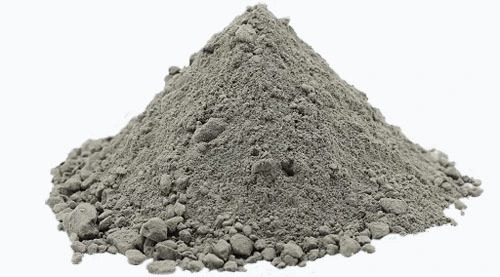
IS 12600 encompasses low heat Portland cement, detailing its manufacturing, chemical, and physical prerequisites. This standard is essential for applications necessitating minimal heat generation during hydration, such as dam construction with massive concrete structures. Low heat Portland cement specified in IS 12600 features a reduced content of tricalcium aluminate (C3A) and a higher proportion of dicalcium silicate (C2S) at 46 percent.
Low heat Portland cement is manufactured through the meticulous mixing of calcareous and argillaceous materials, along with other substances containing silica, alumina, or iron oxide. This blend undergoes controlled temperature burning, followed by grinding the resulting clinker to achieve cement that meets specified standards. Following the burning process, only gypsum, water, or both, along with a maximum of one percent air-entraining agents, are permissible additives.
Low heat Portland cement must conform to the chemical and physical criteria outlined in the standard when subjected to designated testing methodologies.
KEY HIGHLIGHTS
| Product Name | LOW HEAT PORTLAND CEMENT |
| Applicable Indian Standard | IS 12600 |
| Applicable Certification Scheme | Product Certification Scheme (ISI Mark Scheme) Scheme 1 - Schedule 2 |
| Compliance Requirement | Mandatory |
| QCO Link | Quality Control Order |
TESTS
The specified tests must be conducted as per the prescribed method.
-
Fineness
-
Soundness
-
Setting time test
-
Compressive Strength
-
Heat of hydration
Also Read: Quality Control Order For Cement
An appropriately maintained laboratory is essential for conducting various tests according to the methods outlined in the standard.
The manufacturer is responsible for demonstrating compliance with this standard for low heat Portland cement. Each bag or drum of cement must bear the BIS Standard Mark (ISI Mark) on its label, provided the material meets specification requirements. Marking procedures must adhere to IS 12600. Additionally, manufacturers need a BIS license from the Bureau of Indian Standards to use the standard mark (ISI Mark). This license is granted upon successful assessment of manufacturing infrastructure, quality control measures, testing capabilities, and production processes.
PROCESS FOR BIS ISI MARK CERTIFICATION

INDIAN STANDARD FOR CEMENTS
| IS Number | Product Name |
|---|---|
| IS 1489 (PART 2) | PORTLAND POZZOLANA CEMENT |
| IS 16415:2015 | COMPOSITE CEMENT |
| IS 455:2015 | PORTLAND SLAG CEMENT |
| IS 12330 | SULPHATE RESISTING PORTLAND CEMENT |
| IS 1489 (PART 1): 2015 | PORTLAND POZZOLANA CEMENT |
| IS 269:2015 | ORDINARY PORTLAND CEMENT |
| IS 3466:1988 | MASONRY CEMENT |
| IS 6909:1990 | SUPERSULPHATED CEMENT |
| IS 8042:2015 | WHITE PORTLAND CEMENT |
| IS 6452:1989 | HIGH ALUMINA CEMENT |
| IS 8043:1991 | HYDROPHOBIC PORTLAND CEMENT |
| IS 8229:1986 | OIL WELL CEMENT |
| IS 15895:2011 | HIGH ALUMINA REFRACTORY CEMENT |
| IS 16993:2018 | MICROFINE ORDINARY PORTLAND CEMENT |
BIS CERTIFICATION PROCESS
Acquiring a BIS license requires a comprehensive review of manufacturing infrastructure, quality control abilities, testing resources, and production procedures. This thorough assessment guarantees that products not only adhere to regulations but also prioritize consumer safety and reliability.
NOTE:
For comprehensive guidance on the BIS ISI Certification process, please explore:
WHY USE ABSOLUTE VERITAS?
Absolute Veritas is a prominent organisation from the private sector of India primarily dealing with the Inspection, Testing, Audits, Certification of products& consulting services to various industries in India and worldwide, ensuring compliance with regulatory standards and industry requirements. Offering a comprehensive range of services including product certification, testing, training, auditing, and compliance services, Absolute Veritas helps manufacturers and importers achieve higher production efficiency and quality standards.
Absolute Veritas (BIS Consultant) will handle end to end pre-registration request, sample preparation, documentation, testing and application process for FMCS Certification
For any questions regarding the most recent update on FMCS registration licenses, please reach out to us via email at cs@absoluteveritas.com
Frequently asked questions (FAQ)
Why is Low Heat Portland Cement important in mass concrete construction?
Low Heat Portland Cement is essential in mass concrete construction because excessive heat generation can cause thermal stress, internal cracking, and reduced durability. By producing lower heat of hydration, LHPC ensures a uniform temperature distribution within large concrete sections, improving structural integrity, crack resistance, and service life of heavy civil engineering projects.
How does Low Heat Portland Cement differ from Ordinary Portland Cement?
Unlike Ordinary Portland Cement, Low Heat Portland Cement releases heat at a slower and more controlled rate, reducing the risk of thermal cracking in thick concrete pours. While early strength development is slower, LHPC provides better volume stability, improved durability, and higher long-term strength, making it more suitable for large-scale infrastructure works.
Which BIS standard applies to Low Heat Portland Cement in India?
In India, Low Heat Portland Cement must comply with BIS standard IS 12600, which specifies requirements related to chemical composition, heat of hydration limits, physical properties, and performance criteria. Compliance with this standard ensures that the cement meets national quality and safety benchmarks for use in large construction projects.
Are there any limitations of using Low Heat Portland Cement?
Low Heat Portland Cement generally develops strength more slowly during the early stages of curing, which may require extended curing periods before formwork removal or load application. Because of this, it may not be ideal for projects requiring rapid construction or early strength gain.
How can manufacturers obtain BIS certification for Low Heat Portland Cement?
Manufacturers can obtain BIS certification for Low Heat Portland Cement by complying with IS 12600 requirements, conducting product testing in BIS-recognized laboratories, implementing quality control systems, and completing the ISI marking process. Certification ensures market acceptance, regulatory compliance, and customer confidence in product quality.
Share this Post
 LinkedIn
  WhatsApp
  Facebook
 CONTACT US


 ❮
❮